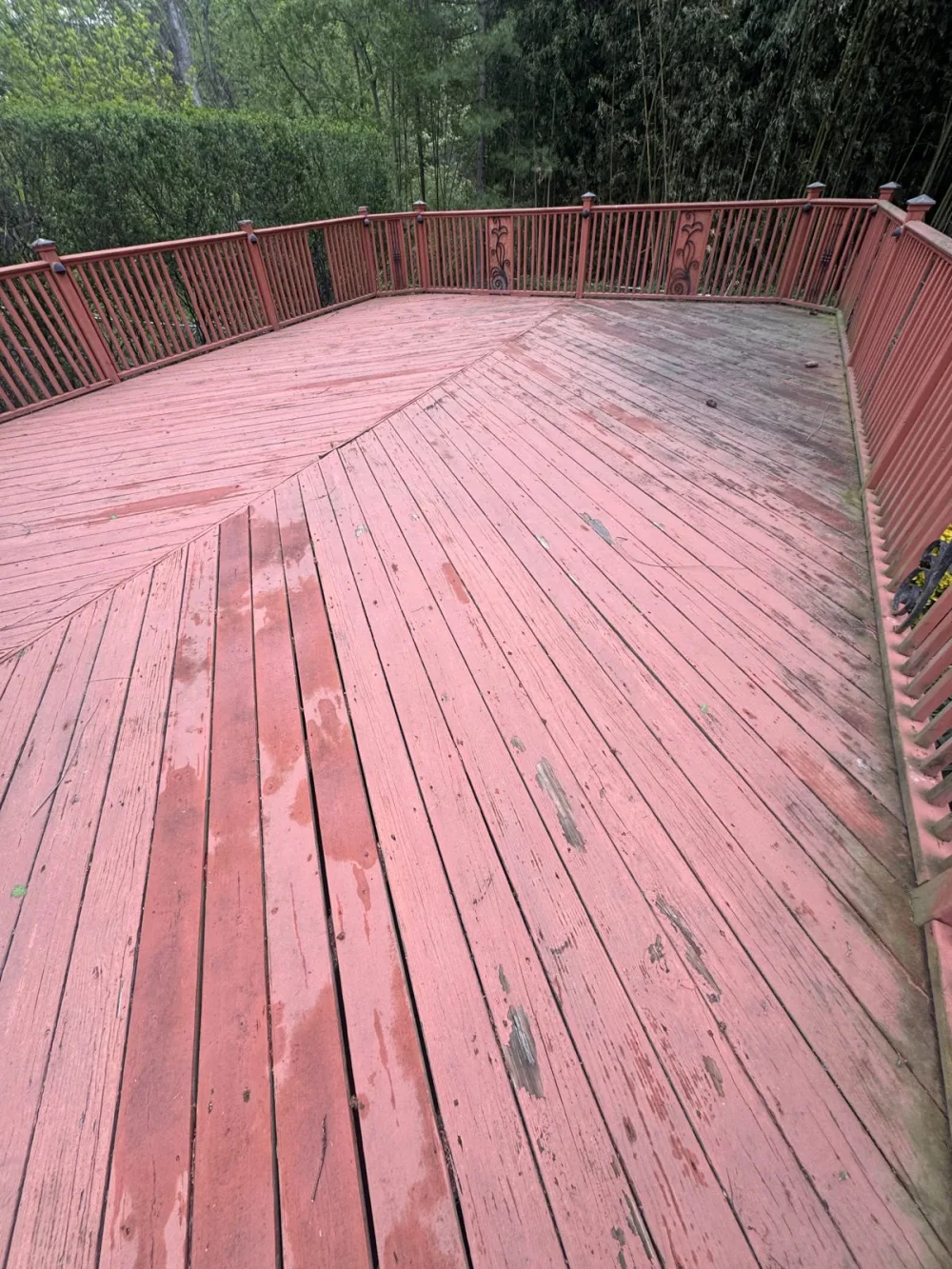
Most calls about a deck start the same way: a board that gives underfoot, a railing that moves when someone leans on it, or a gray, splintering surface that no longer looks worth staining. The question behind every one of those calls is whether the deck can be fixed or has to come down. Here is how we answer it on site, and what we found on a large deck we rebuilt in Jenkintown.
Start underneath, not on top
The surface tells you the least. A deck that looks tired from above can have sound framing, and a deck with fresh stain can be rotting where nobody looks. So the first thing we do is get under it with a flashlight and a screwdriver.
- The underside of the boards. Rot usually starts where a board sits on a joist and stays damp. Dark, stringy wood or white fuzzy growth there means water has been trapped for a long time.
- The joists and beams. Press the screwdriver into the top edge of a joist. Sound wood stops it. If it sinks in, the framing is part of the problem.
- Where the deck meets the house. The ledger board bolted to the house carries one side of the deck. Stains running down it, or soft wood around the bolts, are a red flag.
- The posts and footings. Posts set straight into the ground rot at the base. Leaning posts or footings that have heaved mean the deck is no longer sitting where it was built.
When a repair makes sense
If the framing is solid and dry, the problem is usually the surface and the railing, and those can be fixed:
- Replacing a handful of cracked or soft boards with new ones.
- Tightening or replacing loose railing posts and balusters.
- Cleaning, sanding and resealing or restaining the deck.
- Rebuilding a set of steps that has worn out faster than the rest.
A repaired deck with a good frame can give years of service. The test is simple: would we be comfortable putting new boards on what is underneath?
When it needs to come down
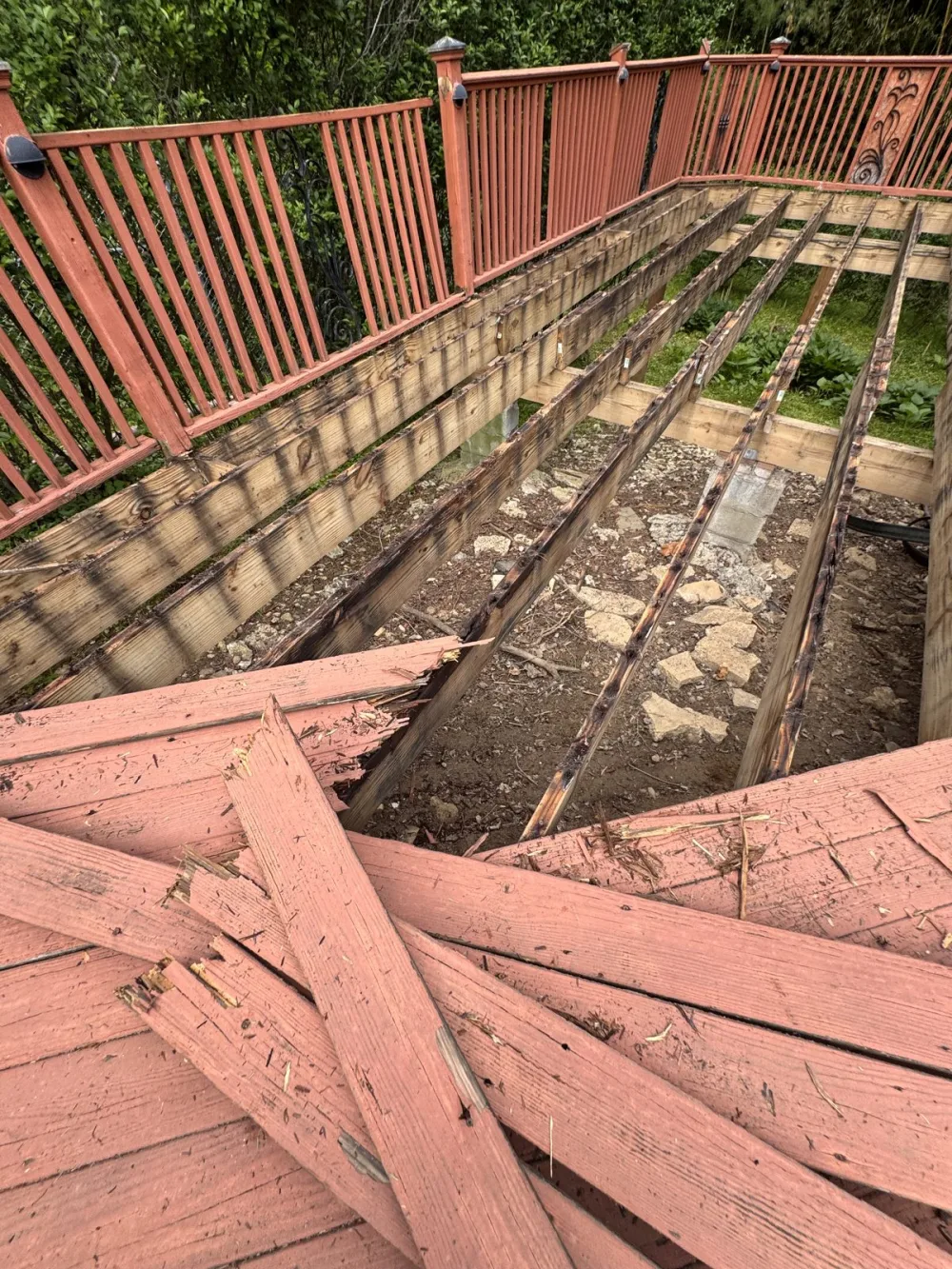
When the rot is in the joists, the ledger or the posts, new boards on top only hide the problem for a season or two. That was the case in Jenkintown: the boards were rotting from the underside, and the framing they sat on was in the same condition. Patching would have meant paying twice.
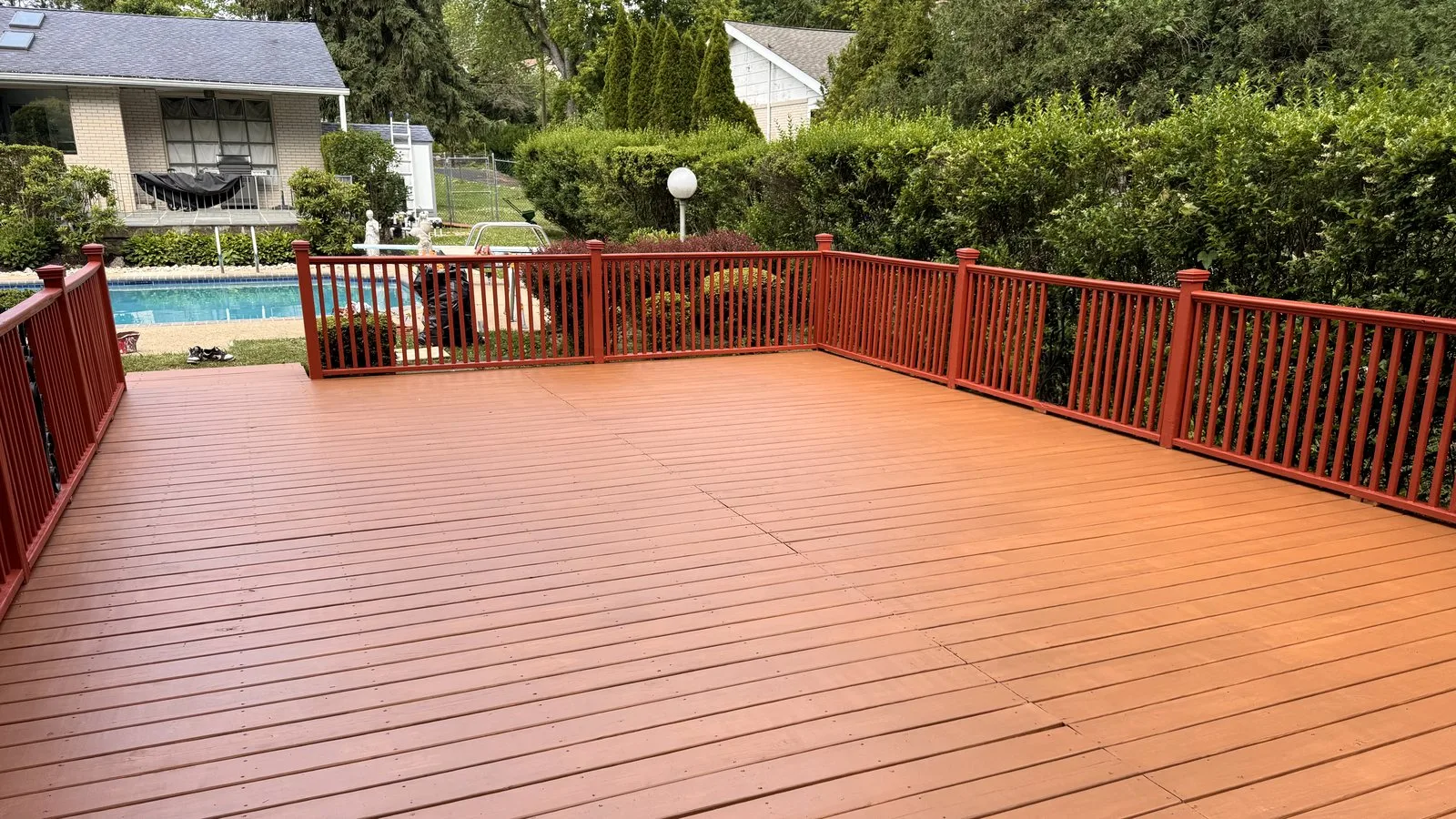
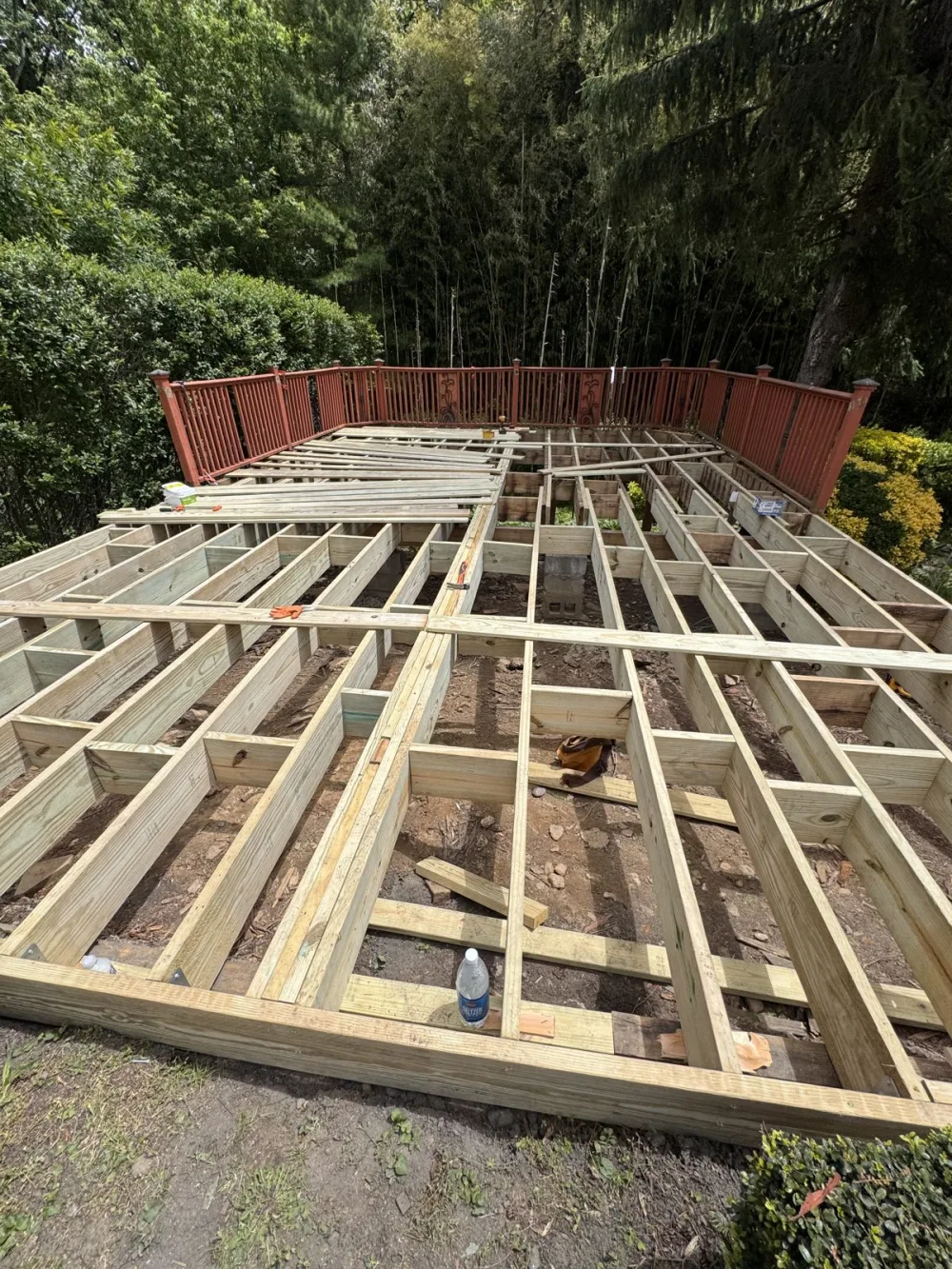
So we took the deck apart down to the footings, checked what was still sound, and built it back on new pressure-treated framing: joists and blocking across the full footprint, new boards, rebuilt steps and walkway, and a stain on the deck and railing that ties it all together. You can see the before photos, the tear-out and the new framing on the project page.
What affects the cost
We don't price decks from a photo, because the same square footage can mean very different jobs. What moves the number most:
- Repair or rebuild. Replacing boards on a sound frame is a fraction of the work of a new frame.
- Size and height. A large or elevated deck needs more framing, more posts and often more footings.
- Material. Pressure-treated wood costs less up front; composite costs more but skips the restaining.
- Railings and steps. Long railings, wide stairs and walkways add up quickly.
- Access and haul-away. Tearing out an old deck and removing the debris is part of the job, and a tight yard makes it slower.
How long it takes
A board and railing repair is usually a short visit. A full rebuild runs in stages: permit, tear-out, footings and framing, inspection where required, then boards, railing and finish. Weather matters too: stain needs dry days to go on. We give a schedule with the estimate so you know when the yard will be usable again.
Questions we hear
Can you put new boards on my old frame?
Only if the frame is sound. If the joists or ledger are soft, new boards hide the problem for a season or two.
Is my deck safe to use until you get there?
If a railing moves or a board gives way, keep people off that area. Soft framing near the house is the most serious sign.
Do you work outside Philadelphia?
Yes. We build and repair decks across Montgomery and Bucks County, including Jenkintown, and in nearby New Jersey.
Questions worth asking any deck contractor
- Did you look underneath? A quote written from the yard is a guess.
- What happens to the ledger? It should be flashed so water runs past it instead of sitting on top.
- What are the posts sitting on? Proper footings below the frost line, not posts buried in dirt.
- Do we need a permit? Most new decks and structural repairs do. Your contractor should handle it.
- What finish will you use, and how often will it need redoing? Wood needs regular care. If you would rather not, ask about composite, which we cover in composite vs. wood decks.
Not sure which one you have?
Send us a few photos of the deck from underneath and from the side, plus one of where it meets the house. That is usually enough to tell whether you are looking at a repair or a rebuild before anyone visits. Our deck construction and repair page covers the rest, and you can request a free estimate any time.